by Emma Nelson, LACIS’ Communications Assistant
This past summer, LACIS faculty affiliate Tom Popkewitz, a Professor of Curriculum and Instruction in the School of Education, taught a course in Brazil, focused on different schools of research and paradigms.
As a recipient of the Fulbright Specialist Program award in April 2026, Tom would travel twice to Brazil in 2026, where he would work with graduate students and faculty at the University of Brasília and institutions in Rio de Janeiro.
At the root of his project, titled “Reform, Curriculum Development, and Internationalization”, is a desire to examine how knowledge shapes educational systems and the collectives these systems serve. Tom Popkewitz’s research considers how curriculum models are developed for students, and how the organization and classification inherently carry assumptions about who is a good student and what is a good society. These norms extend into the function of school and learning, creating and distributing differences in the way of thinking.
Popkewitz poses a central paradox in the context of an “equal society”: although reform seeks to promote this concept of equality, in the way it is defined and thought of, it reinforces the inequalities.
Tom’s previous work in Brazil was ultimately what led him to the Fulbright opportunity. After years of collaboration with Brazilian scholars, he was presented with the opportunity to present and educate on different schools of research and paradigms. His work explored approaches, methodologically, and how you think about studying people. Ultimately, his path was influenced by endless literature, including his own, which led him to question: how do you think about knowledge- “knowledge which creates what you see”?
During Tom’s time in Brazil, he worked with students and faculty on projects, focused on doctoral education and the professionalization of teachers. At the University of Brasília, Tom, alongside several doctoral students, gave a course on the history of science as it relates to scientific research.
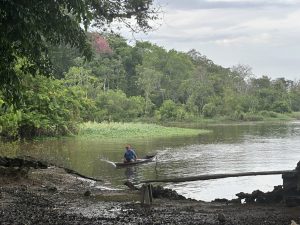
Beyond his experience at the University of Brasília, Tom continued his work at the University of Pará in Belém. Tom was introduced to an educational framework heavily impacted by colonization. While at the University of Pará, he traveled to the regional city of Cametá. In Cametá, he worked on a project focused on training teachers in local schools who had not received higher education. The training allowed teachers to gain experience and supported steps necessary to develop educational opportunities for students within the community.
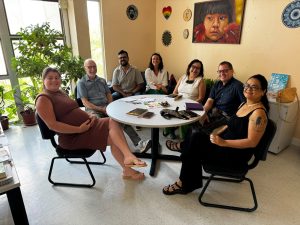
Since returning from Brazil, Tom has revisited and begun numerous research projects; one of which continues his work with Brazilian colleagues as a co-editor of a special issue journal. Tom hopes to further grow these relationships with grant funding from the Swedish Science Foundation. The grant was received for the study of international teacher education, which Tom intends to use in collaboration with professors from Brazil.
Tom’s work and partnerships highlight the importance of questioning the functionality of educational systems, but also the assumptions and norms that guide them. Tom’s continued work deepens understanding of these frameworks and systems across borders, supporting progress towards a curriculum and education framework shaped to support the society in which it is provided.