Featuring:
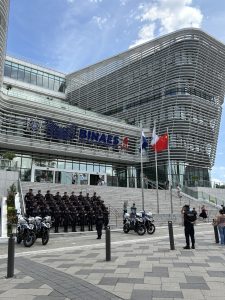 “The Spectacle of Knowledge: BINAES and the Cultural Politics of Authoritarianism” presented by Alan Andrade Camacho.
About the presentation: This presentation examines the new National Library of El Salvador (BINAES) as a cultural infrastructure within Nayib Bukele’s authoritarian political project. I argue that, beyond its cultural function, the library helps produce an image of modernity, openness, democracy, and access to knowledge that contributes to legitimizing the state of exception. At the same time, the presentation shows a paradox: the same space designed to produce consensus has been appropriated by social movements as a site of protest and political dissent.

“The Political Economy of Agro-Developmentalism: Labor, Power, and Change in Brazil’s Agro-Industrial Complex” presented by Alexandre Espreafico Guelerman Ramos.
I will present findings from five weeks of fieldwork in Brazil, conducted across two major agro-industrial regions: the state of São Paulo and the Vale do São Francisco (spanning the states of Bahia and Pernambuco). I will focus on how these cases speak to two broader theoretical questions, in both instances challenging conventional expectations: (1) how labor scarcity can, counterintuitively, contribute to increasing informality; (2) how workers organize in industries characterized by high labor turnover.

“Trust in Health Information Sources and Vaccine Confidence: Evidence from Colombia” presented by Leonor Hidalgo
A nationally representative survey conducted in Colombia in July 2026 indicates that trusted health information sources significantly influence perceptions of vaccine safety and efficacy among Colombians. The findings reveal that 68% of respondents trust vaccine safety, while 72% believe in its effectiveness. Additionally, trust in physicians and scientific associations correlates positively with confidence in vaccine safety.

“Examining the Linguistic Landscape of Intercultural Bilingual Education in Ecuador: Exploring the Relationship Between Kichwa and English” presented by Adriene Lane.
How can English be taught in ways that complement, rather than compete with, the Kichwa language and culture within Ecuador’s Intercultural Bilingual Education (EIB) system? This presentation introduces a new research project exploring the relationship among Kichwa, Spanish, and English in EIB schools in Ecuador and how educators and communities understand the roles of these languages. Drawing on preliminary fieldwork conducted in northern Ecuador, including classroom observations, interviews with educators, and policy analysis, I discuss emerging themes related to multilingualism and language ideologies while considering whether English can support, rather than detract from, Kichwa language and culture.
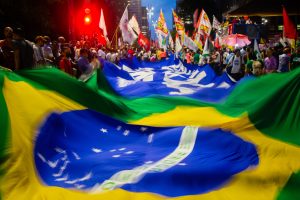 “Coalitional Presidentialism and Political Fragmentation: The Case of Brazil” presented by Mario Pino Flores.
About the presentation: As political scientists have long argued, the combination of presidentialism with proportional representation poses persistent challenges to governability in Latin America. A recent issue has been the rise in the effective number of parties and the resulting fragmentation of legislatures, evident in Chile and Peru, a problem that Brazil has faced since recovering its democracy. Debate has concentrated on regime type (presidentialism versus parliamentarism) and on electoral rules as instruments for containing fragmentation and aggregating voter preferences. Comparatively less attention has been paid to the institutional arrangements internal to legislatures, such as agenda-setting prerogatives, the centralization of procedural authority in party leaders, and restrictions on individual initiative, that can offset its effects. Brazil is the paradigmatic case. This presentation examines coalitional presidentialism, the legislative rules that sustain it, and their consequences for managing a highly fragmented party system.
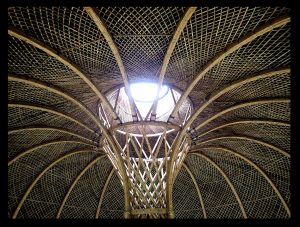 “Living Environments of Care: Continuity of Ancestral Therapeutic Practices in Colombia” by Elizabeth Rendón Betancur
This research study explores how certain isolated communities in Colombia design and care for their living environments in ways that support emotional well-being, stress regulation, and collective care. It does so by examining the application of ancestral environmental knowledge that guides the design, maintenance, and governance of these living environments in contemporary context. The study focuses on everyday practices and the spaces in which they take place, including homes, communal buildings, and outdoor gathering areas. It examines how these spaces are organized, built, and maintained to promote balance, healing, and connection with nature. Findings may inform future design approaches for high-stress and confined environments.