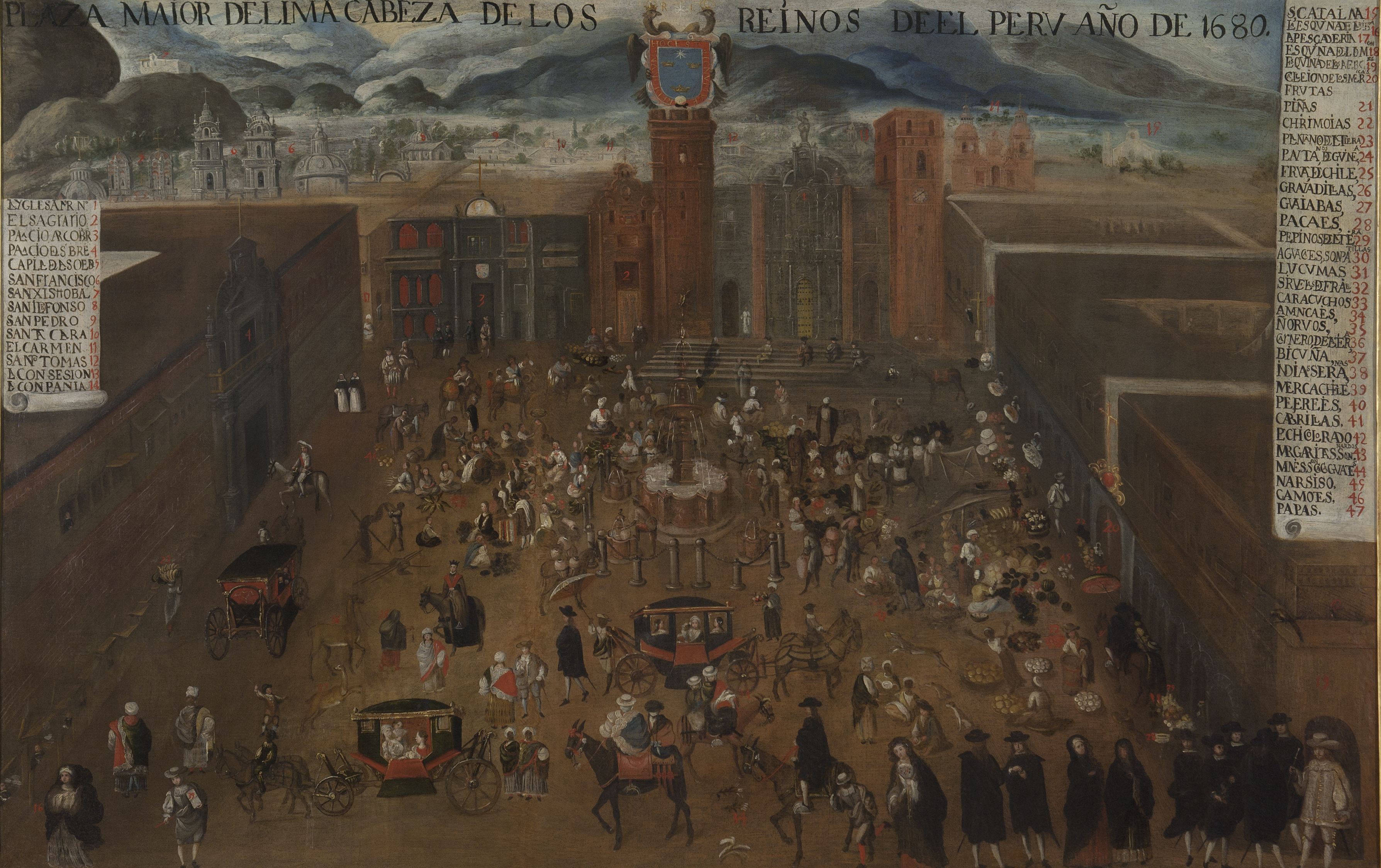
About the presentation: I argue that Black men and women living in seventeenth-century Lima, Peru (a majority Black city) created their own political corporations that governed themselves and effectively negotiated with authorities. Based on a careful examination of lawsuits, wills, notarial records, petitions, chronicles, and poetry centering free and enslaved Black people in Lima, my work reconstructs their political status as it emerged from their daily lives, negotiations, and contestations. My forthcoming book focuses on three types of self-governing corporations: lay confraternities, militias, and guilds. Within these groups, women as well as men took on prominent roles. In some contexts, enslaved people could also take part as civic leaders. Members of these corporations argued, with some success, that they formed a legitimate part of the Spanish kingdom. What is more, they also made both implicit and explicit references to their African origins as they did so. Tracing their relationships with political authority is necessary to illuminate not only their lives, but also their place in the emerging colonial order and nation-making projects. This insight helps scholars to push the limits of our political imagination about anti-Blackness and its history.
About the presenter: Dr. Marcella Hayes is an Assistant Professor of History at UW-Madison. She is an historian of Latin America and early modern Iberia, with an emphasis on the Andes. She studies how Black people shaped early modern Iberian political life, using their ideas of community and methods of self-governance to rethink early modern concepts of belonging. In my research and teaching, I focus on inclusion and exclusion, political claims-making, and the development of categories of identity.
Her book Black Self-Governance: The Making of Political Culture in Seventeenth-Century Lima, which won the 2025 Founder’s Prize for manuscripts in development from the Sixteenth Century Society, is forthcoming from University of Pennsylvania Press in 2026.